
Identity and Belonging
Impure BloodThis flow examines the novel’s recurring question of how people inherit, conceal, or lose a sense of identity.
increasing Bearing strength in each event
 decreasing
Bearing strength in each eventdecreasingA False Religious Identity
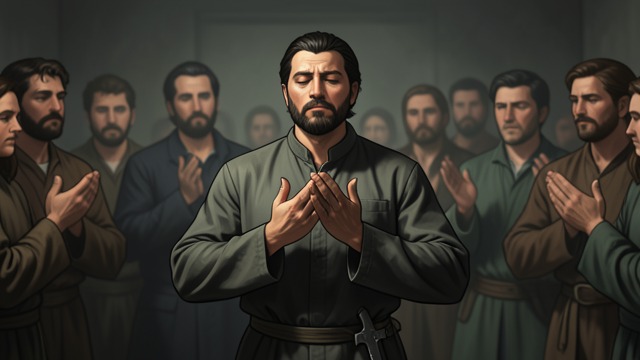
A False Religious Identity
Florian copies a community
Florian imitates the movements of Muslim worshippers to hide within their outdoor service. His false participation exposes how a person can enter a public ritual without sharing the identity it expresses.
Mistaking proximity for motive
The crowd’s presence initially makes the death look religiously motivated. Darac’s work shows why proximity to a community cannot establish either belonging or culpability.
Mansoor’s Hidden Status
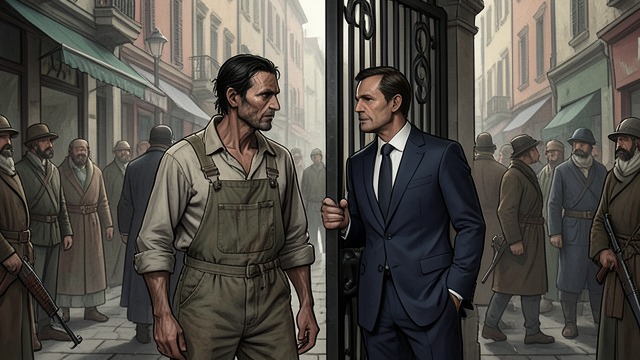
Mansoor’s Hidden Status
A name exchanged
Mansoor Narooq takes Slimane Bahtoum’s place because he fears that police questioning will expose his illegal status. Their resemblance makes his attempt at temporary anonymity possible.
Identity as risk
The switch is not an attempt to evade responsibility for murder but to avoid a system that may remove him from the country. His fear shows how legal identity can determine a person’s safety before any crime has been proved.
Corinne’s Uncertain Heritage
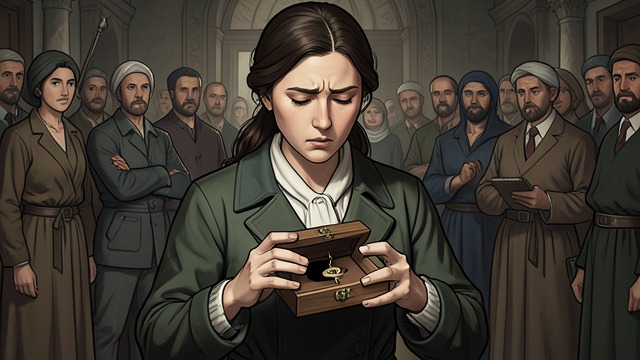
Corinne’s Uncertain Heritage
A sign of belonging
The mezuzah in Corinne Delage’s home has been repeatedly put up and taken down. Its handling suggests an inherited Jewish identity that she cannot fully claim or discard.
The past becomes personal
The discovery prompts investigators to reconstruct her childhood and Jewish origins. What first looks like a minor clue opens a story of survival and dislocation shaped by persecution.
Jean’s Hidden Parentage
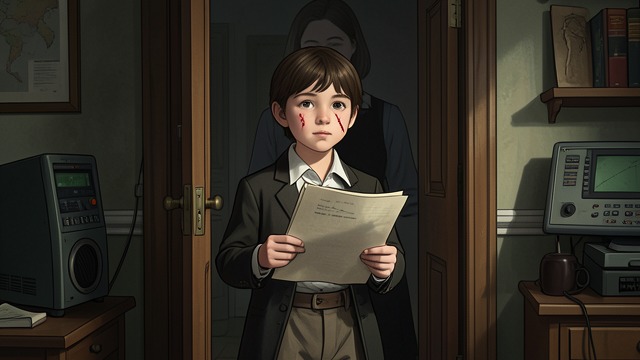
Jean’s Hidden Parentage
A survival concealed
Jean Florian was born to Adam and Elena Djourescu but raised as the child of Louise Florian after the newborn exchange. He grows up without knowledge of the family from whom he came.
Identity restored too late
The revelation reaches Jean through Emil’s cruel letter and comes to full consequence only after Jarret acts on it. Knowledge restores his origins but cannot undo the years of neglect or control what his son makes of the truth.
Blood Is Not Destiny
Blood Is Not Destiny
Kinship revealed
Agnès learns that Jean Florian is her half-brother and that Corinne Delage is his surviving sister. The discovery redraws the Dantier and Florian family lines across decades.
Choice remains central
The revelation does not make people morally equivalent or turn blood into an explanation for every action. The novel distinguishes inherited identity from chosen conduct, especially in the contrast between survival, betrayal, and revenge.
3 July, midday
3 July, late afternoon
4 July, night
5 July, early afternoon
9 July, late morning
